Train the Brain: 5 Mental Skills Every Youth Coach in Orlando Should Be Teaching Right Now
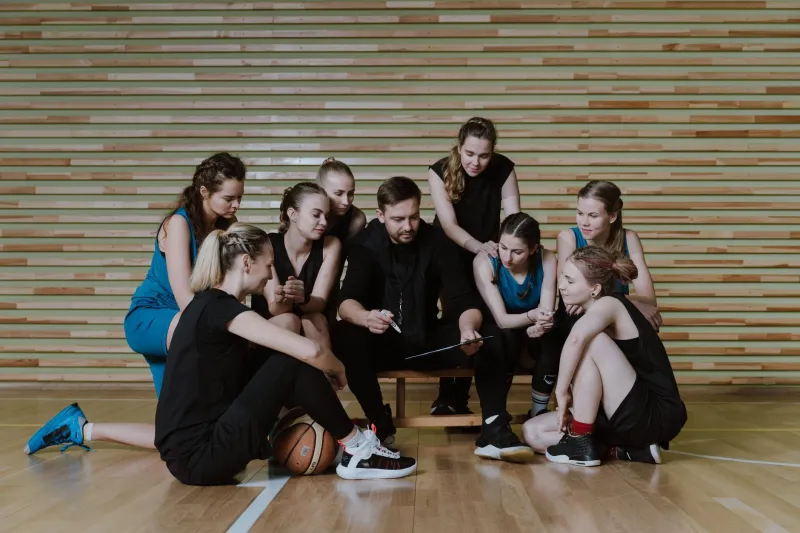
Every coach in Orlando knows how to run a solid practice. Warm-ups, skill drills, scrimmages, cool-downs. The physical side of youth sports development is well-documented, widely taught, and endlessly debated on sidelines across Central Florida.
But here's what doesn't get nearly enough attention: what's happening between a young athlete's ears.
The mental game — the ability to stay composed under pressure, bounce back from a tough loss, and maintain focus when everything feels like it's falling apart — is what separates good athletes from great ones. And the good news? It's trainable. Just like a jump shot or a corner kick, mental toughness is a skill that can be taught, practiced, and developed over time.
At Orlando City Youth, we've spent time with coaches, sports psychology practitioners, and the athletes themselves to bring you five evidence-based mental training techniques that youth programs can start using right now.
1. Visualization: See It Before You Do It
Visualization — sometimes called mental imagery or mental rehearsal — is one of the most widely researched tools in sports psychology. The concept is simple: athletes mentally simulate a performance before it happens, using as many senses as possible to make the mental experience feel real.
Before a free throw, a penalty kick, or a big at-bat, athletes who practice visualization have literally already done it hundreds of times in their minds. The brain, to a remarkable degree, doesn't distinguish between a vividly imagined experience and a real one.
"I started doing five-minute visualization sessions at the end of practice with my 12U soccer group," says Coach Tanya Morales, who runs a youth development program in the East Orlando area. "I have the kids close their eyes and walk through a game situation — what they see, what they hear, how their feet feel on the ball. You can see the difference in how they carry themselves on game day."
How to implement it: Set aside five to ten minutes at the end of practice, two or three times a week. Guide athletes through a specific scenario — a clutch play, a comeback situation, a successful performance — using calm, descriptive language. Encourage them to engage all five senses in the mental picture.
2. Positive Self-Talk: Changing the Inner Monologue
Every athlete has a voice in their head. For a lot of young players, that voice is brutally critical. A missed shot becomes I'm terrible. A stumble becomes I always mess up. Left unchecked, that kind of internal narrative does real damage to performance and confidence.
Positive self-talk doesn't mean plastering fake optimism over genuine struggle. It means teaching athletes to respond to mistakes with constructive, forward-facing language instead of self-defeating commentary.
The research on this is solid. Studies from sports psychology journals consistently show that athletes who use instructional and motivational self-talk — phrases like "stay low," "you've got this," or "reset and go" — perform better under pressure than those who rely on negative or no internal cues at all.
How to implement it: Have each athlete on your roster identify two or three personal power phrases — short, specific, and meaningful to them. Practice using those phrases during drills when things go wrong. Make it part of the culture. When a player on your team drops a pass or strikes out, the instinct should eventually shift from I'm the worst to shake it off, next play.
3. Breathing Control: The Reset Button Every Athlete Carries
This one sounds almost too simple, but the science is airtight. Controlled breathing directly influences the nervous system, reducing the physiological stress response that causes athletes to "choke" under pressure — the racing heart, the tight muscles, the foggy thinking.
Teaching young athletes a basic breathing protocol gives them an on-demand reset button they can use anywhere: before a game, during a timeout, after a bad play, even in the middle of a test at school.
One popular method is box breathing: inhale for four counts, hold for four, exhale for four, hold for four. Repeat two or three times. It's used by military special forces, professional athletes, and elite performers across industries — and it works just as well for a nervous 13-year-old stepping up to the free throw line.
"We call it 'finding your anchor' in our program," says youth basketball coach Jerome Pittman, who works with middle schoolers in the Parramore area of Orlando. "When I see a kid getting in their own head, I just tap my chest twice. They know what that means. Take a breath. Reset. You're good."
How to implement it: Introduce a breathing routine during warm-ups or before scrimmages. Build it into your pre-game ritual so it becomes automatic. Once it's habitual in low-stakes moments, athletes can access it naturally when the pressure is real.
4. Process Goals: Shifting Focus from the Scoreboard
One of the most damaging things a young athlete can do is fixate on outcomes — the win, the stat line, the scholarship offer. Outcome goals are largely outside an athlete's control, and chasing them creates anxiety, inconsistency, and a fragile sense of self-worth that crumbles the moment results don't go their way.
Process goals are different. They focus on what an athlete can control in any given moment: effort level, body positioning, communication with teammates, execution of a specific technique. Research consistently shows that athletes who orient toward process goals perform better and experience less anxiety than those locked onto outcomes.
"I used to ask my players what they wanted to accomplish in a game, and they'd all say 'win' or 'score a hat trick,'" Coach Morales told us. "Now I ask them to give me two things they're going to focus on that are entirely in their control. The shift in mindset is huge."
How to implement it: Before every practice and game, have each player set one or two process goals. After the session, revisit them — did they hit those targets? Keep the debrief focused on effort and execution, not the score. Over time, this reframes how athletes define success.
5. Resilience Rituals: Teaching Athletes to Fail Forward
Failure is unavoidable in sports. A team that never loses doesn't exist. But the way young athletes respond to adversity — a losing streak, a personal slump, a tough injury — determines whether they grow stronger or shrink from the challenge.
Resilience isn't something kids either have or don't have. It's built through intentional practice, and coaches are in a unique position to create the conditions for it.
One practical approach is what some sports psychologists call the "flush it" technique — a brief, deliberate ritual athletes perform after a mistake to symbolically let it go. It might be a physical gesture, a verbal phrase, or even just a specific breath. The point is to create a mental dividing line between the error and the next moment of performance.
"We do a thing in our program where after a tough loss, every player has to name one thing they're going to do differently and one thing they're proud of," says Coach Pittman. "It's not about sugar-coating. It's about teaching kids that losing is information, not identity."
How to implement it: Create space in your program for honest, constructive reflection after difficult moments. Normalize struggle as part of the process. Model resilience yourself — let your athletes see you handle adversity with composure, and they'll learn to do the same.
The Bottom Line
At Orlando City Youth, our mission has always been about building champions on and off the field. That means developing the whole athlete — physically, academically, and mentally. These five techniques aren't extras or luxuries. They're foundational tools that every youth coach should have in their toolkit.
The body can only go as far as the mind will allow it. Start training both.