No Playbook, No Problem: How First-Generation Athletes Are Shaking Up Youth Sports in Orlando
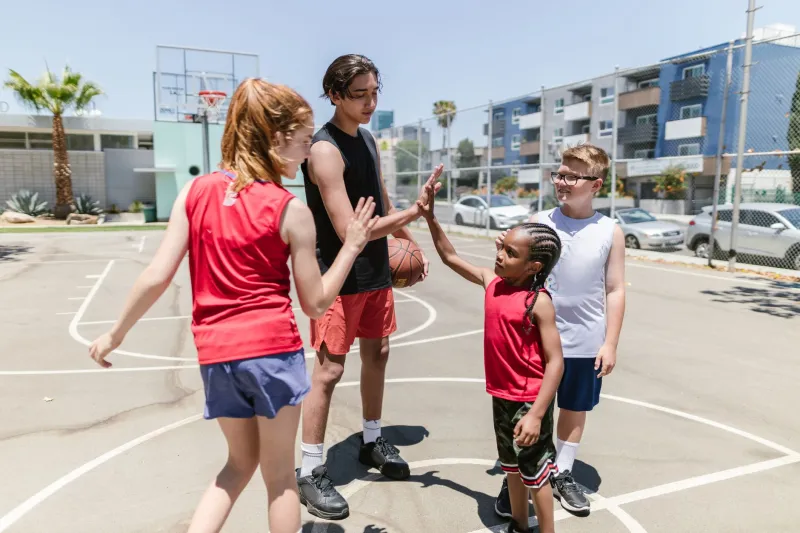
When Marcus showed up to his first practice at twelve years old, he didn't know what a set play was. He'd never watched film. He didn't have a training history, a highlight reel, or a parent who could decode the coach's feedback after practice.
What he had was curiosity, energy, and absolutely zero bad habits.
His coach, who has worked with youth athletes across Central Florida for over a decade, remembers thinking: this kid is going to be interesting. He was right.
Marcus is what the youth sports world is starting to call a first-generation athlete — a young person whose parents didn't play competitive sports, didn't grow up in athletic households, and are navigating youth sports culture for the very first time right alongside their kid. No inherited playbook. No family muscle memory for how this world works. Just showing up and figuring it out.
And across Orlando, more families like Marcus's are entering youth sports programs than ever before. What they're bringing with them is changing the culture in ways nobody fully expected.
Starting From Zero — Which Isn't Actually Zero
There's a common assumption in youth sports that kids from athletic families have the upper hand. And in some ways, they do — they've absorbed the language, the culture, the unwritten rules since childhood. They know how to talk to coaches, how to handle tryouts, how to carry themselves in a locker room.
But here's what first-generation athletes have that's harder to teach: they don't know what they're supposed to be afraid of.
Kids who grow up in sports households often inherit more than skills. They inherit anxiety about performance, pressure to carry on a family legacy, and sometimes a complicated relationship with a sport that was chosen for them before they could choose it themselves.
First-generation athletes walk in with none of that baggage. They're not trying to live up to a parent's stats or redeem a family's unfinished athletic business. They're just playing. And that freshness — that genuine, unfiltered enthusiasm for the experience itself — is something coaches across Orlando say is genuinely refreshing.
"They ask questions that kids who've been in sports forever stopped asking years ago," said one youth soccer coach based in Orange County who works with a diverse mix of families. "Like, why do we do it this way? And sometimes I realize I don't have a great answer. They push me to be more intentional."
The Challenges Are Real — And Worth Naming
It would be dishonest to paint this picture without acknowledging the friction.
Youth sports in America is a world dense with insider knowledge. There's the language — positions, formations, conditioning terminology. There's the culture — how to behave in the dugout, when to speak up, when to stay quiet. There's the logistics — travel schedules, gear requirements, tryout etiquette — that feel obvious to families who grew up in it and genuinely bewildering to those who didn't.
For first-generation athlete families, every layer of this has to be learned in real time, often without a community of experienced parents to turn to. Simple things — like understanding what a club team commitment actually costs, or knowing it's okay to ask the coach for feedback — can feel like navigating a foreign country without a map.
Financial barriers compound the challenge. Families without a sports background are less likely to have budgeted for the significant costs that come with competitive youth programs: registration fees, uniforms, travel, private training. Programs like Orlando City Youth that actively work to lower those barriers aren't just providing access to sport — they're creating on-ramps into a world that otherwise has a very narrow entrance.
What They Bring to the Team
Coaches who work with diverse rosters — kids from athletic families alongside kids who are entirely new to organized competition — have started noticing something interesting about team chemistry.
First-generation athletes tend to be exceptionally coachable. Not in a passive, just-tell-me-what-to-do way, but in the sense that they're genuinely hungry for information. They haven't been told a dozen times by parents and private trainers what they should be doing. So when a coach teaches something, it lands. It sticks. There's no competing voice at home second-guessing the instruction.
They also bring a different relationship with winning. For kids from sports households, winning often carries the weight of family expectation. For first-generation athletes, winning is exciting — but it's not the entire point yet. They're still in love with the experience itself: the practices, the friendships, the novelty of being part of something. That perspective has a way of grounding teams that might otherwise become too results-obsessed.
"Having a few kids on a team who are just genuinely happy to be there — it matters more than people think," said a youth basketball coach who's worked at Orlando-area community centers for years. "It reminds the kids who've been grinding since age six why they started."
Rewriting What Athletic Legacy Looks Like
Here's the part of the story that doesn't get told enough.
When a first-generation athlete finds their footing in youth sports, they don't just benefit themselves. They become the starting point of something. The parent who never played competitive sports, sitting in the bleachers figuring it all out, is building a new family relationship with athletics from scratch. Their younger siblings will grow up differently. Their own kids someday will have a parent who gets it.
That's a generational shift. And it starts with a twelve-year-old showing up to practice without knowing what a set play is, deciding to stay curious instead of scared.
At Orlando City Youth, we believe the future of this city's athletic culture isn't built only by kids who come from sports families. It's built by every kid who walks through the door for the first time — nervous, excited, and ready to learn — and the communities that choose to meet them exactly where they are.