Stronger Together: What Happens When Orlando's Youth Teams Stop Sorting Kids by Skill Level
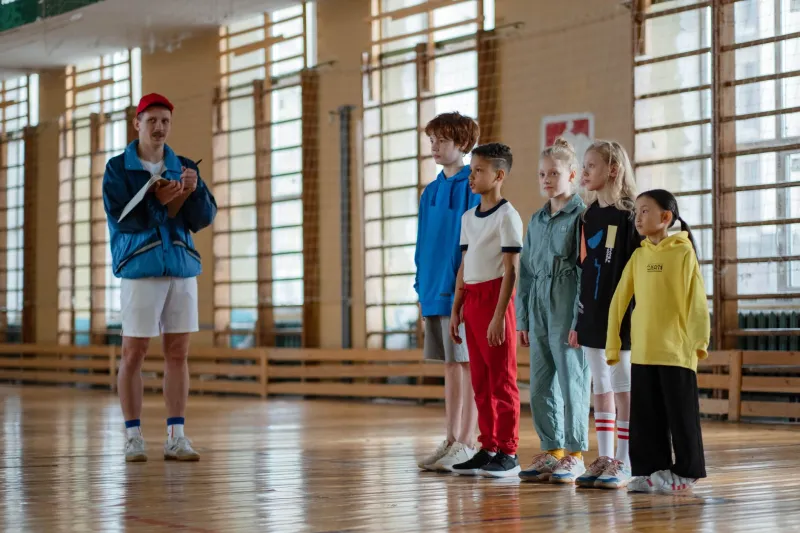
Walk into almost any competitive youth sports environment and you'll see the same sorting process in action. The fast kids over here. The ones who need more development over there. A-team tryouts on Saturday morning, B-team on Sunday afternoon.
It makes a certain kind of sense, logistically. Coaches want to work with athletes at similar stages. Parents want their kids challenged at an appropriate level. The system is built around optimization — getting the best performance out of every tier.
But a handful of youth programs across Orlando are asking a different question: What if we stopped sorting? What if we put the advanced athlete next to the beginner on purpose, and let something unexpected happen?
The answer, it turns out, is pretty compelling.
The Myth of the Watered-Down Team
The biggest pushback against mixed-skill athletic programs usually comes from parents of high-performing athletes. The concern is understandable: won't their kid be held back? Won't the pace be too slow? Won't they lose their competitive edge?
Research — and on-the-ground experience from coaches in Orlando — suggests the opposite tends to happen.
When advanced athletes are placed in mentorship roles within a team, their own understanding of the game deepens significantly. Teaching a skill forces you to break it down in ways you've never had to before. Explaining why you cut toward the near post instead of the far one, or how you read the defense before making a pass — that kind of articulation builds a level of mastery that just drilling the skill over and over doesn't always produce.
Coach Darnell Whitfield, who runs a mixed-level youth basketball program out of a community center in Pine Hills, has watched this play out for years.
"My best players got better by becoming teachers," he says. "They started seeing the game differently because they had to explain it. And the younger or less experienced kids? They leveled up faster than they ever would have in a separated program because they had real role models right next to them — not on a pedestal somewhere else."
Empathy Is a Skill. Sports Can Teach It.
There's a conversation happening in youth development circles about social-emotional learning — the idea that schools and programs need to be more intentional about teaching kids how to navigate relationships, manage emotions, and understand perspectives different from their own.
Mixed-skill sports teams are, almost by definition, a social-emotional learning environment.
When a 12-year-old who's been playing soccer since she was five has to genuinely root for a teammate who just started the sport and is still figuring out which foot to use — that's empathy in action. When a kid who struggles with coordination scores their first goal and the whole team goes wild, and the star player is the loudest one celebrating — that's a community being built in real time.
These aren't manufactured moments. They emerge naturally when you put kids with different backgrounds and ability levels in a shared pursuit.
Sofia Reyes, a 15-year-old who plays in a mixed-skill recreational league in East Orlando, noticed the shift in herself without anyone pointing it out to her.
"I used to get frustrated when teammates made mistakes," she admits. "Now I just think about what I can do to help. I don't know when that changed, but it did."
Tearing Down the Pay-to-Play Wall
One of the less-discussed benefits of inclusive, mixed-skill programming is what it does to the socioeconomic dynamics of youth sports participation.
Elite travel programs in Central Florida can run families anywhere from a few hundred to several thousand dollars per season when you factor in fees, equipment, and travel. That price point locks out a massive portion of Orlando's youth population — kids who might have real athletic talent, real potential, and zero access to the environments where that talent gets developed and recognized.
Mixed-skill programs that prioritize inclusion over competitive sorting tend to be more accessible. They're often run through community centers, parks and recreation departments, and nonprofit organizations. They're designed around participation, not performance tiers.
And when kids from different zip codes and different economic backgrounds end up on the same team, something important happens: the neighborhood starts to feel a little smaller. A little more connected.
"These kids wouldn't necessarily cross paths otherwise," says Maria Castillo, a parent volunteer with a youth flag football program in the Parramore neighborhood. "But now they're texting each other about practice. They're showing up for each other. That's not nothing — that's actually everything."
Peer Mentorship: The Underrated Engine
Formal mentorship programs require infrastructure. They require adult volunteers, matching systems, training, and ongoing coordination. All of that is valuable — but it's also resource-intensive.
Mixed-skill sports teams create peer mentorship organically, without anyone having to organize it.
The kid who's been playing longer naturally shows the newer player how to position their body for a throw. The athlete who struggled with nerves before games shares what helped them with a teammate who's going through the same thing. These exchanges happen on the sideline, in the car after practice, at the water break between drills.
Research on peer learning consistently shows that kids often absorb information more readily from someone close to their own age than from an adult authority figure. Mixed-skill teams put that dynamic to work every single practice.
At Orlando City Youth, we've watched peer mentorship reshape kids who came into programs as followers and leave as leaders — not because anyone handed them a title, but because the environment gave them a natural opportunity to step into that role.
What Orlando Gets Right (And Can Build On)
Orlando is a uniquely positioned city for this kind of work. It's one of the most diverse metros in the country. It has a young population. It has a deep love of sport — from professional soccer to pickup basketball to everything in between.
The programs doing inclusion right here aren't doing anything exotic. They're just making a deliberate choice to value participation over sorting, community over competition, and the long-term development of the whole kid over the short-term optimization of any single skill.
That's a choice any program can make. It doesn't require a massive budget or a fancy facility. It requires coaches who believe that the kid who just laced up their cleats for the first time deserves the same investment as the one who's been training since kindergarten.
Because in the long run, the strongest teams — and the strongest communities — aren't built by separating people by what they can already do. They're built by putting people together and seeing what they become.