Are You Helping or Hovering? The Parent's Honest Guide to Showing Up Right on Game Day
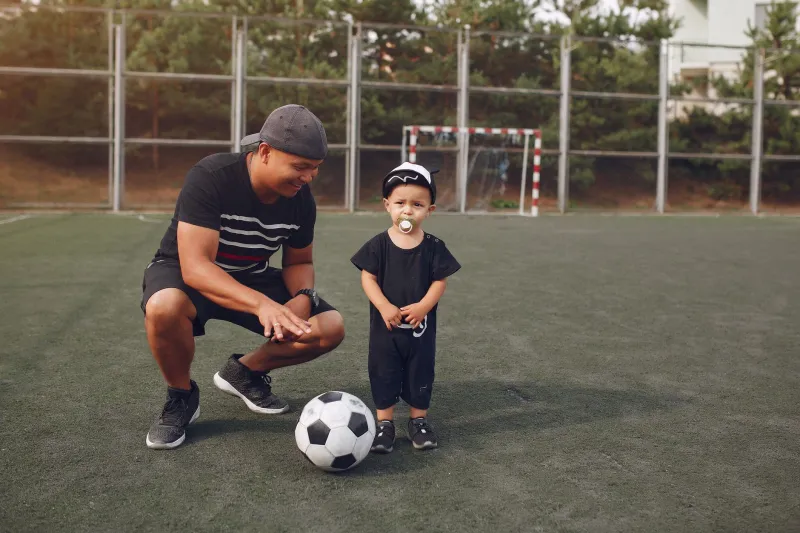
Let's just say it: being a sports parent is a lot.
You're the alarm clock, the chauffeur, the snack coordinator, the emotional support system, and the loudest voice in the bleachers — sometimes all before 9 a.m. on a Saturday. You love your kid. You want them to succeed. You've invested real time and real money into making this happen.
So why does it sometimes feel like the harder you try, the more complicated things get?
Here's the uncomfortable truth that youth sports development folks have been sitting with for a while now: parental involvement in youth athletics is one of the most powerful forces in a young athlete's experience — and it can cut both ways. The same energy that fuels a kid's confidence can, if it tips too far in the wrong direction, quietly erode it.
This isn't about shaming parents. It's about getting honest with ourselves so we can show up the way our kids actually need.
What Kids Say When Adults Aren't Listening
When researchers and coaches ask young athletes what they love most about playing sports, the answers are pretty consistent: being with friends, having fun, getting better at something, feeling part of a team. What they love least? Pressure. Criticism from the sidelines. Feeling like they're performing for someone else instead of playing for themselves.
Multiple studies on youth athlete motivation have found that kids who feel heavy parental pressure around performance are more likely to experience anxiety, burnout, and early dropout from sports — even when they're talented. The pressure doesn't have to be aggressive or loud to do damage. Sometimes it's subtle. A long car ride debrief after a loss. A disappointed look after a missed shot. A constant stream of coaching tips that weren't asked for.
Kids are perceptive. They pick up on more than we realize.
The Difference Between Support and Pressure
This is where a lot of well-meaning parents get tripped up, because the line between support and pressure isn't always obvious in the moment.
Support sounds like: "I love watching you play." "How did that feel for you?" "I'm proud of how hard you worked today."
Pressure sounds like: "You should've passed earlier." "Why didn't the coach put you in more?" "You need to work on your footwork this week."
The difference isn't volume — it's focus. Support keeps the spotlight on the child's experience. Pressure redirects it toward outcomes, performance, or the parent's own expectations.
One framework that coaches and sports psychologists often recommend is what's sometimes called the "24-hour rule" — after a game, give it a full day before bringing up anything critical. In that window, the only conversation is about how your kid felt, what they enjoyed, and whether they're hungry. It sounds almost too simple. But it works.
The Coach Is Not the Enemy
One of the fastest-growing issues in youth sports right now is parent-coach conflict, and it's taking a real toll — not just on coaches (who are already in short supply), but on the young athletes caught in the middle.
When a parent undermines a coach's decision in front of their child — whether that's questioning playing time, second-guessing strategy, or openly criticizing the coach's approach — it puts the kid in an impossible position. They're being asked, implicitly, to choose a side. And that kind of loyalty conflict creates anxiety that follows them onto the field.
Coaches aren't perfect. Sometimes they make calls you disagree with. The appropriate channel for that is a calm, private conversation — not a sideline confrontation or a group-chat vent session. If you have a genuine concern about how your child is being treated, address it directly and respectfully. Model the conflict resolution skills you want your kid to develop.
And honestly? A lot of the time, what looks like a bad coaching decision is actually a learning opportunity your child needs to navigate. Letting them work through frustration, adapt, and keep going is part of the whole point.
Building Resilience, Not Rescue
One of the most valuable things youth sports can give a kid is the experience of struggle — and the discovery that they can handle it.
But that only happens if we let it.
When parents jump in to fix every problem, smooth every rough patch, or advocate loudly every time their child doesn't get what they want, it sends a message: you can't handle this without me. Over time, that message undermines the very confidence and resilience we're trying to build.
Resilient athletes — the ones who bounce back from a tough loss, who push through a slump, who stay coachable even when they're frustrated — tend to have something in common. They have parents who expressed belief in their ability to figure things out, rather than parents who figured things out for them.
That doesn't mean being cold or disengaged. It means being a safe landing place after your kid has had a chance to process, rather than rushing in before they've had the chance to try.
Practical Ways to Be the Parent Your Athlete Needs
Here are a few concrete things you can start (or stop) doing right now:
Do: Ask open-ended questions after games. "What was your favorite moment?" goes a lot further than "Why didn't you score?"
Do: Make the car ride home a judgment-free zone. Music, snacks, light conversation. Save the analysis.
Do: Show up consistently. Your presence matters more than your commentary.
Don't: Coach from the sidelines during games. One coach is enough. Two competing voices create confusion and erode trust.
Don't: Project your own athletic history — or regrets — onto your child's experience. Their journey is theirs.
Don't: Make post-game mood at home contingent on the scoreboard. Kids shouldn't have to manage your emotions on top of their own.
The Bigger Picture
At the end of the day, youth sports are about way more than wins and losses. They're about learning how to be part of something bigger than yourself, how to handle adversity, how to show up even when it's hard.
Parents are part of that lesson — whether they mean to be or not. The question is what kind of lesson you want to teach.
When you cheer for effort over outcome, when you trust the process, when you let your kid own their own experience — you're not stepping back. You're stepping up in the most important way possible.
And that? That's what building champions off the field actually looks like.