Watching Before Leading: How Young Athletes Pick Up Leadership Skills Nobody Teaches Them
There's no formal class for it. No certificate at the end. Nobody hands a nine-year-old a workbook titled How to Lead Your Teammates. And yet, something happens inside youth sports programs every single week that's hard to explain until you've actually seen it.
A younger kid watches an older teammate jog back on defense without being told. They notice how the team captain talks to a frustrated player after a bad call. They pick up on the way a coach handles a mistake—calm, direct, no drama. And slowly, almost invisibly, those observations start shaping how they show up.
This is the unspoken curriculum of youth sports. And in Orlando, coaches and program leaders are starting to talk more openly about what it really produces.
The Kid Who Isn't Captain Yet
At several of Orlando City Youth's programs, coaches have started paying closer attention to what happens at the edges of practice—not the drills themselves, but the moments in between. Who's encouraging a struggling teammate? Who's organizing the group when the coach steps away for a second? Who's already modeled the right behavior before anyone asked them to?
Nine times out of ten, it's not the kid with the official title.
"The leadership we see on paper is just a fraction of what's actually going on," says one youth soccer coach who's worked with kids ages 8 through 14 for nearly a decade. "Some of my most influential players have never been named captain. But every younger kid on that team watches them like a hawk."
That kind of organic influence is harder to measure than a goal scored or a drill completed. But its effects tend to show up in unexpected places—in how a kid handles a group project at school, how they talk to a friend going through something hard, how they respond when things don't go their way.
Small Moments, Big Lessons
Think about what a typical practice week actually contains for a youth athlete. There's the obvious stuff—running, skill-building, scrimmaging. But layered inside all of that are dozens of micro-moments that carry a surprising amount of weight.
A ten-year-old sees a captain take the blame when a play breaks down, even when it wasn't entirely their fault. They watch a coach pull a struggling kid aside and talk to them quietly instead of calling them out in front of everyone. They notice that the best player on the team still runs every sprint, even when they probably don't have to.
These aren't lessons that get written on a whiteboard. They're absorbed through repetition and proximity. And for younger athletes especially, that exposure is doing something significant.
Research on social learning—the idea that people pick up behavior by observing others—has been applied widely in educational settings. But sports environments might actually be one of the most powerful places it operates, because the stakes feel real, the emotions run high, and kids are paying very close attention.
What Orlando Programs Are Doing With This
Some coaches in the Orlando area have started being more intentional about creating conditions where this kind of learning can happen naturally.
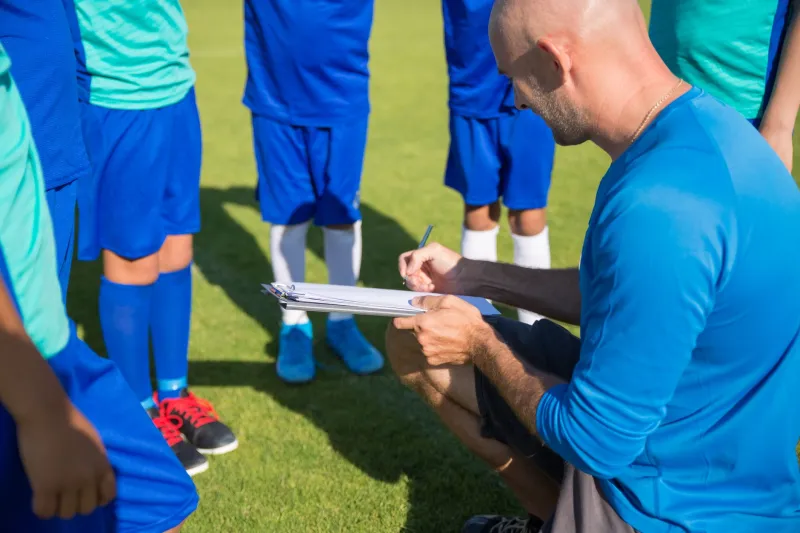
That might mean pairing younger players with older teammates during warm-ups—not to mentor formally, but just to share space. It might mean occasionally letting a younger kid call a drill or lead a stretch, not because they're ready to be a leader in any grand sense, but because the small act of being trusted with something builds something inside them.
One coach described letting an eight-year-old lead the team huddle at the end of a practice—just to say a few words to the group. "She was terrified," he said. "But she did it. And for the rest of that season, she carried herself a little differently. You could see it."
These aren't high-stakes interventions. They're low-pressure, low-risk moments of responsibility that quietly shift how a kid sees themselves.
Why This Matters Beyond the Field
Here's the part that parents sometimes miss when they're focused on scores and standings: the leadership habits kids develop through youth sports don't stay in the gym or on the pitch.
A kid who learns to read a room—to sense when a teammate is frustrated, or when the energy of a group needs a boost—is building emotional intelligence that carries into every relationship they'll ever have. A kid who learns that staying calm under pressure gets better results than reacting emotionally is picking up a skill that'll serve them in job interviews, in friendships, and in the moments life throws something unexpected at them.
And critically, they're learning all of this before anyone expects them to lead. Which is exactly why it sticks.
Leadership that gets handed down through formal titles often comes with pressure, expectation, and the weight of performance. Leadership that gets quietly absorbed through observation and small moments of trust? That tends to feel more natural, more genuine, and more durable.
What Parents Can Look For
If your kid is playing in a youth program right now, here's something worth paying attention to: who are they watching? Not just on the field, but during warmups, during downtime, during the drive home when they're recapping practice.
Kids often model the behavior of the people they respect, and in a sports environment, that circle of influence includes coaches, older players, and even teammates their own age who carry themselves with a certain kind of confidence.
You don't need to engineer this. But you can reinforce it. Ask your kid what they noticed about how a teammate handled something. Ask them what they'd do differently if they were in charge for a day. Ask them who on their team they look up to and why.
Those conversations do more than you'd expect.
The Leadership Nobody Announces
There's a version of leadership development that gets a lot of airtime—the captain's speech, the motivational poster, the formal mentorship program. Those things have value. But some of the most meaningful leadership growth happening in Orlando's youth sports community right now is quieter than that.
It's a ten-year-old watching how a sixteen-year-old handles a bad call and filing that away somewhere. It's an eight-year-old leading a huddle for the first time and realizing they were capable of something they didn't know they could do. It's a kid who's never been given a title but somehow holds the respect of every person in the locker room.
Leadership, at its core, isn't about the title. It's about how you show up. And in youth sports, kids are learning that lesson every single week—whether anyone calls it leadership development or not.