Cheering Too Loud: When a Parent's Love Starts to Feel Like a Scorecard
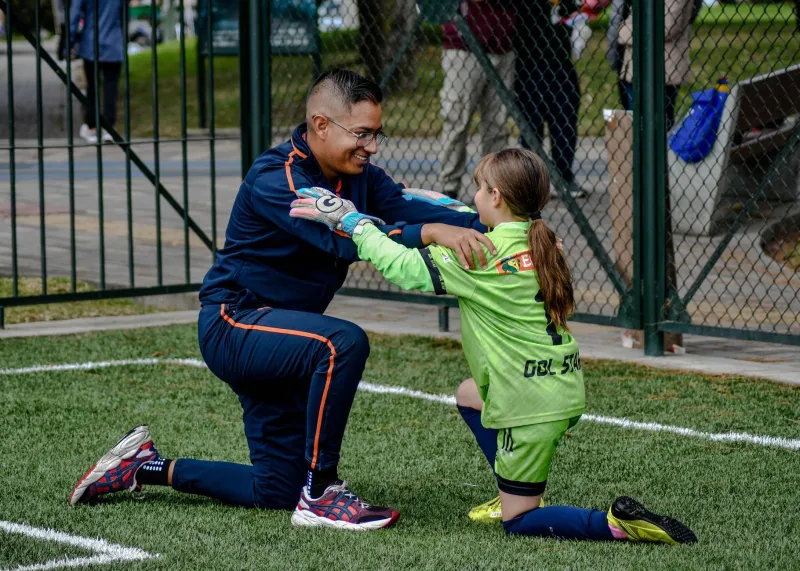
There's a moment that happens in youth sports all the time, and it's easy to miss if you're not looking for it.
A kid makes a mistake — misses a pass, trips over the ball, throws wide — and before they even process what happened, their eyes dart to the sideline. Not to the coach. Not to their teammates. To their parent.
That glance tells you everything. It means the child isn't asking themselves what can I learn from that? They're asking are they disappointed in me?
That's the moment when sports stops being about growth and starts being about survival.
The Love That Accidentally Becomes Pressure
No parent drives forty minutes to a Saturday morning game hoping to make their kid anxious. They bring the lawn chair, the snacks, the team banner — because they care. Deeply. And that care is genuinely beautiful.
But caring and coaching aren't the same thing, and when the two blur together, something shifts in a young athlete's psychology that can take years to untangle.
Coaches and youth development specialists working with kids across Orlando have started calling it "approval-seeking performance" — when a child's internal motivation gets slowly replaced by the need to manage their parent's emotional reaction. The kid stops playing to win or improve. They start playing to avoid the car ride home.
It's rarely dramatic. It doesn't start with a parent screaming from the bleachers (though that happens too). More often, it creeps in through the postgame recap. The well-intentioned breakdown of every decision the child made. The "you should have" and "next time, try" that comes from a place of love but lands like a report card.
The Postgame Car Ride Problem
Ask any group of youth athletes what part of game day stresses them out most, and a surprising number won't say the game itself. They'll say the ride home.
That fifteen-minute window — sweaty uniform, seatbelt on, still processing the adrenaline — has become one of the most psychologically loaded moments in youth sports. It's when parents, with the best intentions, turn into analysts. What went wrong. What could've been different. How the coach made the wrong call.
The problem isn't the conversation. It's the timing. A child who just competed is emotionally raw. Their nervous system hasn't settled. What they need in that moment isn't a film room — they need to feel safe.
When analysis replaces safety, kids learn something dangerous: that their athletic performance is directly connected to the emotional temperature of their home. Mess up on the field, and home gets tense. Play well, and everyone's happy. Over time, they stop taking risks. They stop trying things they might fail at. Because failure, in their experience, has consequences that follow them off the field.
The Highlight Reel Trap
Social media has added a whole new layer to this. Parents posting game clips, sharing stats, building a kind of personal brand around their child's athletic identity — it's everywhere now, and it's changing how kids see themselves.
When a child knows their performance might end up on Instagram or in a group chat, the stakes of every game quietly multiply. They're not just playing for the team. They're performing for an audience. And audiences, unlike coaches, don't care much about the process. They only see the highlight or the mistake.
Kids who grow up in this environment often develop what psychologists call a "fixed performance mindset" — they believe their value is tied to results, not effort. And fixed mindsets don't grow. They contract. They play it safe. They avoid the moments that might expose them.
What Genuine Curiosity Looks Like
Here's the shift that changes everything: moving from judgment to curiosity.
Judgment sounds like: "You really struggled with your positioning today." Curiosity sounds like: "What did today feel like for you?"
One closes the conversation. The other opens the child up. And when kids feel genuinely heard — not evaluated — they actually start reflecting on their own performance more honestly than any postgame breakdown could produce.
Some of the most effective youth sports parents in Orlando have adopted what coaches call the "24-hour rule" — no game analysis for a full day after competition. Just presence. Just the drive home with music or easy conversation. Just dinner without the play-by-play. Let the kid bring it up when they're ready.
Others have switched to asking exactly three questions after a game: Did you have fun? What's one thing you're proud of? Is there anything you want to work on? Simple. Kid-led. No agenda.
The difference in how kids respond is striking. When they're not managing a parent's emotions, they get curious about their own game. They start identifying things they want to improve — not because someone told them to, but because they actually want to get better.
Rebuilding the Trust That Makes Kids Brave
If you're reading this and recognizing your own patterns — that's not a reason to feel guilty. It's a reason to feel hopeful. Because the relationship between a parent and a young athlete is one of the most powerful forces in youth sports, and that power goes both ways.
When a child trusts that the sideline is a safe place — that the car ride home is just a car ride — they start taking risks again. They try the hard move. They go for the shot they might miss. They play free.
And playing free is when kids actually develop. Not just athletically, but as people. The resilience, the self-belief, the ability to shake off a mistake and keep going — those things don't grow under a spotlight. They grow in the space between a parent who loves without conditions and a kid who feels it.
At Orlando City Youth, we say it all the time: building champions off the field starts with the adults in the room choosing connection over correction. Your kid doesn't need a sideline coach. They've already got one in the dugout. What they need from you is something only a parent can give — the certainty that no matter what happens on the scoreboard, they're still enough.