Stuck in Neutral: Understanding Why Young Athletes Stop Improving and How to Get Moving Again
There's a moment every developing athlete knows, even if they can't quite put words to it. They've been putting in the reps. They're showing up to every practice. They're doing everything they were told to do. And yet — nothing seems to be moving. The times aren't dropping. The skills aren't clicking. The game feels like it's moving faster than they can keep up with.
Coaches call it a plateau. Parents call it a rough patch. The kids themselves? They usually just call it frustrating.
Here in Orlando, we see it all the time with young athletes across every sport. And what's interesting is that when you actually dig into what's happening, the answer almost never lives in the weight room or on the practice field alone. The real ceiling most kids bump into is a lot more invisible than that.
It's Not Always About the Body
The easy assumption when a young athlete stops progressing is that they need to train harder, train smarter, or switch up their physical routine. And sometimes, sure, that's part of it. But the plateau problem is rarely that simple.
Developmental science tells us that athletic growth happens in waves, not straight lines. Kids go through physical growth spurts that can actually disrupt coordination and timing before things recalibrate. A thirteen-year-old who was lightning quick at eleven might feel clunky and off-balance for a stretch — not because they've gotten worse, but because their body is literally reorganizing itself.
Add to that the psychological weight that builds up over time. Young athletes who've tasted success early often carry a quiet, unspoken fear of losing it. That fear doesn't look like panic. It looks like hesitation. It looks like playing it safe. It looks like an athlete who's technically doing everything right but isn't taking the risks that actually push growth forward.
That's an invisible ceiling — and it doesn't show up on any training log.
When the Social Environment Gets in the Way
Here's something coaches and parents don't always consider: the people around a young athlete matter enormously to their development curve.
Team dynamics, relationships with coaches, and even family pressure can either fuel a breakthrough or quietly reinforce a plateau. A kid who feels like they have to perform to earn approval — from a parent in the stands, from a coach who only praises results, or from teammates who compete more than they support — often subconsciously caps their own effort. Not because they're lazy. Because growth requires vulnerability, and vulnerability requires safety.
At Orlando City Youth, we've seen kids transform their trajectory simply by shifting into an environment where mistakes are treated as data, not disasters. When a young athlete trusts that the people around them are invested in the journey and not just the outcome, something unlocks. They start trying things they'd been avoiding. They start failing forward instead of freezing up.
Boredom Is a Real Performance Killer
Another underrated factor? Monotony. A lot of youth training programs — even well-intentioned ones — fall into patterns that stop challenging the brain even when they're still challenging the body.
The nervous system adapts. Once a skill becomes automatic, repeating it over and over doesn't build much new capacity. It just maintains what's already there. For a young athlete to break through a plateau, they often need novelty — new drills, new positions, new challenges that force the brain to engage in ways it hasn't had to before.
This doesn't mean abandoning fundamentals. It means layering complexity on top of them. A soccer player who's mastered passing in a static drill needs to start making those same passes under pressure, in tight spaces, with decisions to make. That's where real growth lives.
What Coaches Can Do Differently
If you're a coach watching one of your athletes spin their wheels, start by asking a different set of questions. Not just what are they doing wrong but what are they afraid of trying? Not just how hard are they working but how connected do they feel to the process?
Some practical adjustments that tend to move the needle:
- Change the feedback loop. Instead of evaluating outcomes, start evaluating decision-making and effort. An athlete who made the right call but got a bad result needs to hear that distinction clearly.
- Introduce low-stakes experimentation. Create practice situations where the goal is explicitly to try something new, with zero pressure to succeed. This loosens up the risk-averse mindset that often accompanies plateaus.
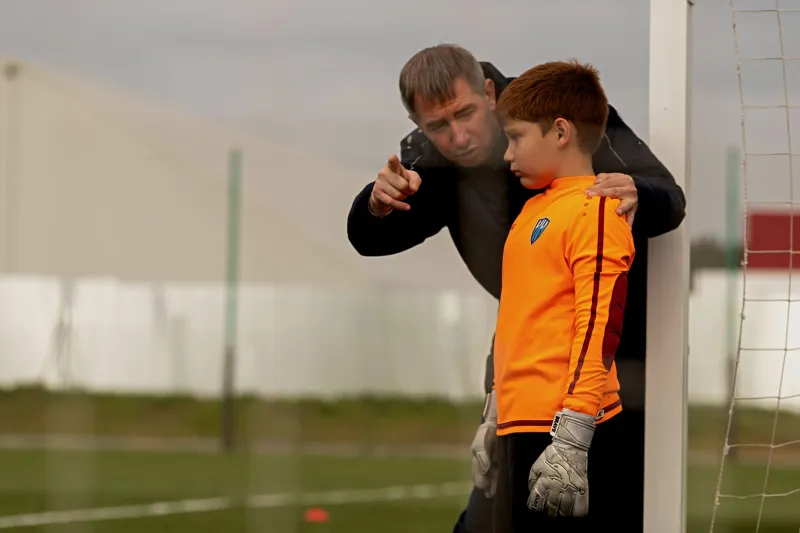
- Have the honest conversation. Sometimes athletes need someone to name what's happening — to say, "Hey, I've noticed you seem stuck, and that's normal. Let's figure it out together." That acknowledgment alone can shift things.
What Parents Can Do Right Now
Parents, your role here is more powerful than you probably realize — and it cuts both ways. The parent who responds to a plateau with extra pressure, extra criticism, or anxious comparisons to other kids almost always makes things worse. The athlete internalizes that anxiety and adds it to the weight they're already carrying.
But the parent who stays curious, stays calm, and keeps showing up without an agenda? That parent becomes an anchor.
Ask your kid what part of their sport they still genuinely enjoy. Ask what they wish they were better at. Ask if there's anything about practice or games that's been stressing them out. You're not diagnosing anything — you're just opening a door. And sometimes that door is exactly what they needed someone to open.
Also worth considering: is your athlete getting enough rest? Plateaus in youth sports are sometimes just the body and mind demanding recovery that isn't happening. Sleep, downtime, and time away from sport aren't signs of weakness — they're part of the development cycle.
The Breakthrough Is Already in There
Here's what we know after working with young athletes across Orlando: the kids who break through their plateaus aren't usually the ones who found some secret training method. They're the ones who found the right support, the right environment, and the right mindset shift at the right time.
The ceiling isn't permanent. It's a signal — that something in the approach, the environment, or the internal narrative needs to evolve. And when athletes, coaches, and parents work together to pay attention to those signals instead of just pushing harder against them, the growth that follows is usually the most meaningful kind.
Because breaking through a wall isn't just about getting faster or stronger. It's about learning that the wall was never as solid as it looked — and that's a lesson that goes way beyond whatever sport they're playing.