Why Your Teen Athlete Has Stopped Telling You Anything (And What to Do About It)
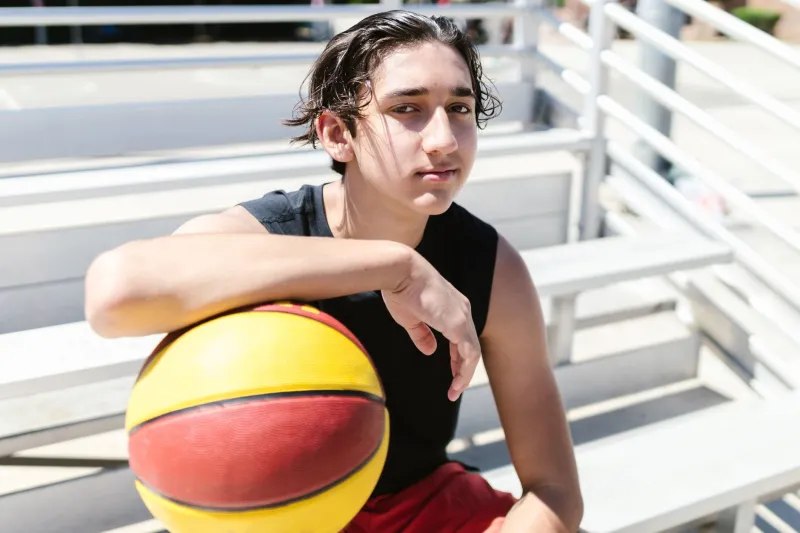
There's a moment a lot of parents in Orlando describe almost identically. At some point — usually somewhere between 12 and 15 — the car ride home from practice goes quiet. The kid who used to narrate every drill, every play, every coach interaction, every teammate drama... just stops. Now it's one-word answers. Fine. Good. Nothing happened. I don't know.
And the parent, sitting there in the driver's seat, trying their hardest not to push, starts to wonder: did I do something wrong? Are they struggling? Is something going on with the team?
The truth is usually more complicated — and more fixable — than most parents realize.
It's Not Personal. It's Developmental.
First, a little relief: if your teen athlete has gone quiet on you, you're probably not the problem. Or at least, not entirely.
Adolescence does something really specific to how kids process their world. As they get older, they become intensely aware of how they're being perceived — by coaches, by teammates, by peers. Their identity starts getting wrapped up in their athletic performance in a way it just wasn't when they were nine years old playing rec soccer.
When sports feel tied to identity, talking about struggles becomes emotionally risky. Admitting to a parent that you got benched, that you're not sure you're good enough, or that you're thinking about quitting — that's not just sharing information anymore. It feels like exposing a crack in who you are.
Parents, even well-meaning ones, sometimes become the last people kids want to show that crack to.
The Pressure Problem
Here's something worth sitting with: sometimes the silence is a direct response to how past conversations went.
Maybe your kid once told you they were struggling with their serve, and you immediately suggested five ways to fix it. Maybe they mentioned a conflict with a coach, and you jumped to call the athletic director. Maybe every post-game conversation, no matter how it started, somehow circled back to what they could've done better.
Kids notice patterns. When sharing something leads to advice they didn't ask for, or emotional reactions they now feel responsible for managing, or follow-up questions every single day — they learn pretty quickly that silence is just easier.
This isn't manipulation. It's self-protection. And it's one of the most common dynamics we see play out in youth sports families.
Warning Signs the Wall Is Going Up
Some degree of privacy is healthy and normal for teen athletes. But there's a difference between a kid who wants a little space and one who's genuinely shutting down.
Watch for these patterns:
- They stop mentioning sports at all, even casually — no game highlights, no teammate stories, nothing
- Their mood after games or practices shifts dramatically, but they insist everything is fine
- They're resistant to going to practice in a way that feels different from normal teenage reluctance
- They've stopped connecting with teammates outside of required team activities
- They seem relieved when a game gets cancelled, rather than disappointed
Any one of these might mean nothing on its own. But if you're seeing several of them together, it's worth paying attention — not by asking more questions, but by creating the kind of environment where answers can come naturally.
What Not to Do (Even Though It Feels Helpful)
The instinct most parents have is to ask more. More directly, more often, in different ways. How was practice? Did you talk to the coach? What did the trainer say about your knee? Are you okay?
This usually backfires. The more a teen feels interrogated, the more they retreat. It's not stubbornness — it's just how the adolescent brain responds to perceived pressure.
Also worth avoiding: immediately problem-solving. When a kid does crack the door open and share something hard, jumping to solutions sends the message that their feelings are just a problem to be fixed. Sometimes they need to be heard before they need to be helped.
And probably the hardest one — try not to make their athletic struggles about your emotions. If they see that telling you something hard causes you to get upset, worried, or visibly stressed, they'll factor that into their decision to share next time.
How to Actually Rebuild the Conversation
The good news is that this communication gap is rarely permanent. Here's what tends to work.
Lower the stakes of talking. Instead of formal check-ins about sports, find low-pressure moments — driving somewhere, cooking dinner, watching TV together. Side-by-side activities are often easier than face-to-face conversations for teens.
Ask different questions. "How was practice?" almost always gets a one-word answer. Try asking something more specific and low-stakes: "What's the most annoying drill your coach makes you run?" or "Who on your team makes you laugh the most?" Lighter entry points often lead somewhere deeper.
Share your own stuff first. Talk about a time you struggled with something at work, or felt like you weren't good enough, or didn't know how to handle a hard situation. Modeling vulnerability makes it feel safer for them to do the same.
Respond to what they say, not what you wish they'd said. If they tell you something small, resist the urge to turn it into a teaching moment or a bigger conversation. Just respond to exactly what they shared. That tells them it's safe to keep going.
Let silence be okay sometimes. Not every car ride needs to be a conversation. Sitting comfortably together without talking builds trust just as much as talking does.
The Bigger Picture
At Orlando City Youth, we talk a lot about building champions on and off the field. A big part of that is recognizing that the relationship between a young athlete and their parent is one of the most powerful forces in their development — and that relationship works best when it's built on trust rather than pressure.
Coaches see it all the time: the kids who are most resilient, most coachable, and most able to handle adversity are almost always the ones who feel like they have a safe person to talk to at home. Not a scout, not a critic, not a performance analyst — just someone who's in their corner no matter what the scoreboard says.
If your teen has gone quiet, the goal isn't to force the conversation back open. It's to make yourself the kind of person they'd actually want to talk to. That takes patience, consistency, and a willingness to listen more than you speak.
But it's worth it. Because the conversations you build now — about sports, about struggle, about figuring things out — are the foundation for every conversation they'll trust you with later.